Can exercises really help with sleep apnea relief?
Absolutely — for many people with mild to moderate obstructive sleep apnea (OSA), targeted sleep apnea exercises can dramatically improve symptoms, reduce snoring, and enhance breathing during sleep. These OSA exercises strengthen the muscles in your throat, tongue, and jaw to prevent airway collapse, giving you better sleep over time — without machines or medication.
TL;DR: Summary of Sleep Apnea Exercises and Benefits
- Key focus: Strengthening throat, tongue, and jaw muscles to reduce airway collapse.
- Best for: Individuals with mild to moderate OSA or chronic snoring.
- Top exercises: Tongue slides, loud vowel sounds, jaw stretches, and nasal breathing drills.
- Results timeline: Notice improvements within 4–6 weeks with daily practice.
- Added benefits: Reduced snoring, improved speech clarity, better breathing awareness.
Understanding Sleep Apnea
Sleep apnea can feel like an invisible force stealing your rest each night. If you’ve felt constantly exhausted despite spending eight hours in bed, this condition might be the culprit. Sleep apnea — especially its most common form, obstructive sleep apnea (OSA) — happens when the muscles around your airway collapse during sleep, blocking breathing and waking you up, often without you realizing it.
What Causes Sleep Apnea?
There’s no single cause, but some common culprits include:
- Weak throat muscle tone which allows the airway to collapse during sleep
- Excess weight or extra neck tissue increasing pressure on airways
- Chronic nasal congestion or blocked nasal passages
- Enlarged tonsils or tongue that crowd or block airflow
Simply put, anything that obstructs airflow in your throat or nasal passages while sleeping can trigger sleep apnea episodes.
Benefits of Sleep Apnea Exercises
So, why choose sleep apnea exercises — and what makes them so effective?
The secret lies in muscle elasticity and tone. Our throat muscles naturally relax when we sleep, but for some people, they relax too much, causing partial or complete blockage of the airway. This is where targeted sleep apnea relief exercises, known as oropharyngeal exercises or OSA exercises, become game-changers: they strengthen the exact muscles that tend to collapse, keeping them firmer and more responsive at night.
With consistent practice, you may experience:
- Significant reduction or elimination of mild to moderate snoring
- Fewer night-time awakenings or gasping episodes
- Reduced apnea episodes (breathing pauses)
- Improved focus and less daytime fatigue
It’s a natural approach that complements medical interventions — or for some, replaces them altogether.
Top Exercises for Sleep Apnea Relief
Let’s dive into the most effective sleep apnea relief exercises. These stop snoring exercises are backed by clinical research and success stories from real sleep apnea clinics — and they’ve transformed sleep quality for countless people just like you.
Tongue Strengthening Exercises
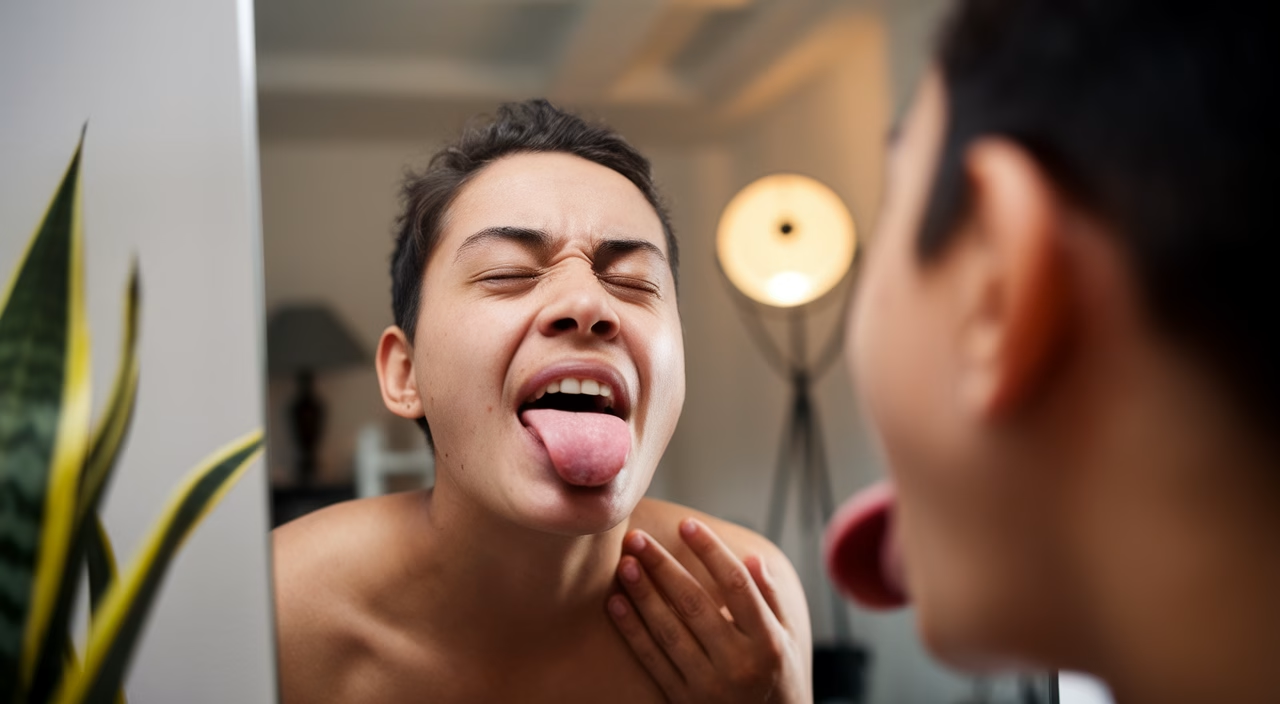
Your tongue is more powerful than you might think. When it collapses backward during sleep, it can easily obstruct airflow. These tongue strengthening exercises for snoring help it maintain proper positioning throughout the night.
Essential Tongue Exercises:
- Tongue Slide: Press your tongue firmly against the roof of your mouth and slide it backward. Repeat 20 times.
- Hard Press: Push your tongue flat against the roof of your mouth as firmly as possible for 10 seconds. Complete 5 rounds.
- “T” Sound Drill: Say the “T-T-T” sound repeatedly in a strong, clear voice to engage tip muscles.
- Hold & Lift: Touch the tip of your tongue to the back of your front teeth and gently lift the mid-section toward the palate for 5 seconds. Repeat 10 times.
Jaw Opening Exercises
Proper jaw positioning plays a crucial role in your airway alignment. A dropping lower jaw can narrow the airway space — a leading cause of snoring and sleep disruptions.
Effective Jaw Exercise Routine:
- Jaw Resistance: Place your thumb under your chin. Slowly open your mouth while pushing against your thumb. Hold for 5 seconds. Repeat 10 times.
- Controlled Mouth Opener: Open your mouth as wide as comfortable, hold for 3 seconds, then slowly close it. This also relieves tension in jaw muscles.
- Circular Motion: Move your jaw side to side in slow, controlled circles, 10 repetitions each direction.
Consistency transforms these simple moves into powerful sleep apnea exercises. Dedicate just 10–15 minutes before bed each night to see real results.
Cost Guide: Sleep Apnea Exercise vs Other Methods
Understanding costs helps you see why sleep apnea exercises are such an attractive, accessible option.
| Method | Low-End Cost | Mid-Range Cost | High-End Cost |
|---|---|---|---|
| Sleep Apnea Exercises | Free | $40 (with course or app) | $100 (1-on-1 coaching) |
| CPAP Machines | $300 | $500 | $1,200+ |
| Sleep Surgery | $7,000 | $15,000 | $25,000+ |
Incorporating Lifestyle Changes for Better Sleep
Sleep apnea exercises work even more effectively when you combine them with strategic lifestyle modifications. We’ve seen countless patients unlock dramatically better results when they incorporate habits like nasal breathing training or positional therapy at home.
Powerful Daily Strategies:
- Weight Management: Even a modest 5–10% reduction in body weight can significantly decrease OSA symptoms.
- Sleep Position Optimization: Sleeping on your side rather than your back can dramatically reduce airway collapse.
- Allergy Management: Clear nasal congestion with saline rinses or air filter improvements to promote natural breathing.
- Nasal Breathing Training: Practice breathing through your nose during the day to strengthen this natural pattern at night.
Change doesn’t happen overnight, but the compound power of daily habits shows up in the quality of your rest. Every small step counts toward your sleep apnea relief.
Conclusion: Sleep Soundly with These Exercises
You don’t have to feel trapped by sleep apnea. While severe cases may require medical devices or surgery, many people with mild to moderate sleep apnea find genuine, lasting relief through consistent, targeted OSA exercises.
Give your body what it needs — strength and support, not just medical machinery. Your airway muscles can grow stronger. Your nights can become quieter. And over time, those small nightly choices can deliver the silent, restorative sleep you’ve been craving.
Frequently Asked Questions
Can throat exercises stop snoring?
Yes. Throat exercises build tone in the muscles that collapse during sleep and cause snoring. When practiced daily, these stop snoring exercises can significantly reduce or eliminate mild to moderate snoring by improving airway stability.
How long do I need to do sleep apnea exercises before seeing results?
Most people notice improvement within 4 to 6 weeks. Consistency is key — daily practice of these sleep apnea relief exercises yields the best results.
Are these exercises effective for all types of sleep apnea?
No. These OSA exercises are best suited for obstructive sleep apnea (OSA). They are generally ineffective for central sleep apnea, which has neurological causes.
Can I do these exercises if I’m already using a CPAP machine?
Absolutely. Sleep apnea exercises can complement CPAP use by strengthening your airway muscles and possibly reducing machine dependence over time.
What if I can’t stick to a routine?
Start small. Just five minutes a day of tongue strengthening exercises for snoring can initiate progress. Create a bedtime ritual, and track your consistency — small habits grow over time.
Do I need a specialist to teach me these exercises?
No, though some people benefit from professional coaching. There are effective self-guided resources available to learn stop snoring exercises safely at home.
Are tongue exercises safe for children with sleep apnea?
Yes, under proper supervision. Pediatric sleep specialists often include orofacial therapy in non-invasive treatment plans for children with mild OSA.